
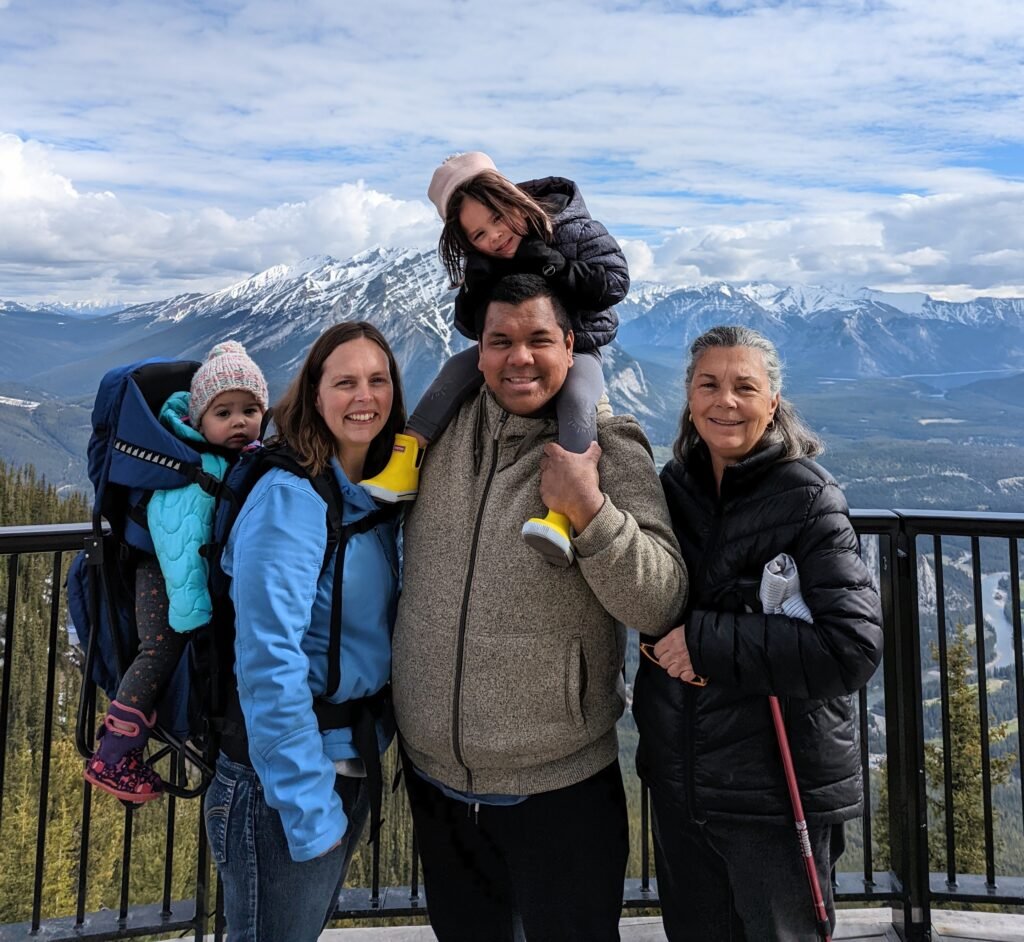
Planning a family trip sounds magical— but it can be really overwhelming between juggling dates, destinations, and budgets. After years of trial and error (and more than a few “why did we pack this?” or “what were we thinking?!” moments), I’ve discovered that every family trip follows four distinct stages. This was written for a trip we took in 2022, fresh out of COVID and when we had a 1 and 3 year old in tow. It’s really fun to look back at this and while these stages still happen now, everything is so much easier with the practice we’ve had and having older kids who are used to flexibility and adventures.
Stage 1: The Plan
Months before departure, you wake up with that wonderful thought: “We should take a trip!” Maybe you have a free week on the calendar, a sudden urge to explore a new destination, or simply that restless itch that comes from staying put too long. For me, it was an overwhelming desire to see mountains.
This stage is pure excitement—so many possibilities! Dates, destinations, travel buddies—the world is your oyster. But here’s the catch: if you don’t set limits early, the options can quickly become overwhelming. Add in cost considerations, and suddenly you’re knee-deep in spreadsheets trying to test out and optimize every detail.
For us, with young kids and unpredictable COVID rules, we decided to stick to North America—and ultimately Canada. Banff it was! Timing was tricky: summer prices skyrocket after mid-June, but snow can linger well into May. That left us with a narrow window to make it work.
Stage 2: The Details
Flights booked? Check. Destination chosen? Check. Now comes the nitty-gritty: accommodations, transportation, and activities. These choices can make or break your trip.
Do you rely on Ubers and haul car seats everywhere? Wait an hour for a crowded airport bus after a long travel day? Stay in a hotel, Airbnb, or cozy bed-and-breakfast—and how close do you need to be to the main attractions? And then there’s the big question: what will keep two toddlers happy for X number of days?
This is where my beloved spreadsheet shines. Tabs for everything: packing lists, confirmation codes, suggested activities (complete with cost, address, hours, and estimated toddler tolerance). When travelling with little kids the goal is to have a very flexible outline. So, our plan? Wake up, check the weather, and pick an activity off the spreadsheet without stress. For Banff, I researched family-friendly hikes, gondola rides, pools, parks, and—of course—ice cream shops.
Stage 3: Panic
Even with all that planning, this stage sneaks in. You start packing (using your spreadsheet, naturally) and then the “what ifs” hit:
- What if it’s freezing? Pack gloves, hats, coats.
- What if we go swimming? Add swimsuits and floaties.
- What if it rains nonstop? Toss in splash pants, raincoats, boots.
And for every scenario you prepare for, there are ten more you haven’t thought of. Traveling with very young kids means anything can happen—and maybe 15% of it is in your control. Spills, bumps, coughs, tears, fights, bathroom accidents… sometimes all within 10 minutes. And heaven help you if it’s on the airplane.
There’s only so much you can pack and prepare for, which brings us to the final stage…
Stage 4: Acceptance
Take a deep breath. Kids will be kids—whether you’re at home or in the mountains. Yes, they might be a little “extra” with all the new experiences, but the meltdowns and snack demands would happen at home too. At least now you have a stunning view while dealing with it.
Pack your wallet, phone, and passport. Everything else? You’ll figure it out.
Family travel isn’t about perfection—it’s about embracing the chaos and making memories along the way. The snacks will run out, the naps will be skipped, and someone will cry (maybe even you). But when you look back, you’ll remember the laughter, the views, and the joy of experiencing something new together. So start planning, accept the unpredictability, and get ready for an adventure worth every spreadsheet cell.