
I thought I’d take advantage of some rainy downtime to share how our worldschooling journey is going so far. Today actually marks our two-month anniversary of travelling full-time, which feels hard to believe. What’s surprised me most is just how easy it’s been to settle into this new routine. For most of our adult lives, we’ve worked full-time while the kids spent most of their days in daycare or school. Before leaving, I expected stepping away from both of those structures would feel like a massive adjustment. Instead, we’ve slipped into this new lifestyle far more naturally than I ever imagined.
Anyway, I digress. The real point of this post is to share how we imagined worldschooling before we left, what we got right, and what we’ve got wrong… so far.
Before we left, I spent a lot of time thinking about what “school” would look like on the road and how we would make it all work. Anyone who has worked with me knows my preferred method for organizing my thoughts and sharing them with others: a PowerPoint presentation. I’ll spare you all the slides, but I’ll share the key concepts behind how we planned to approach worldschooling.
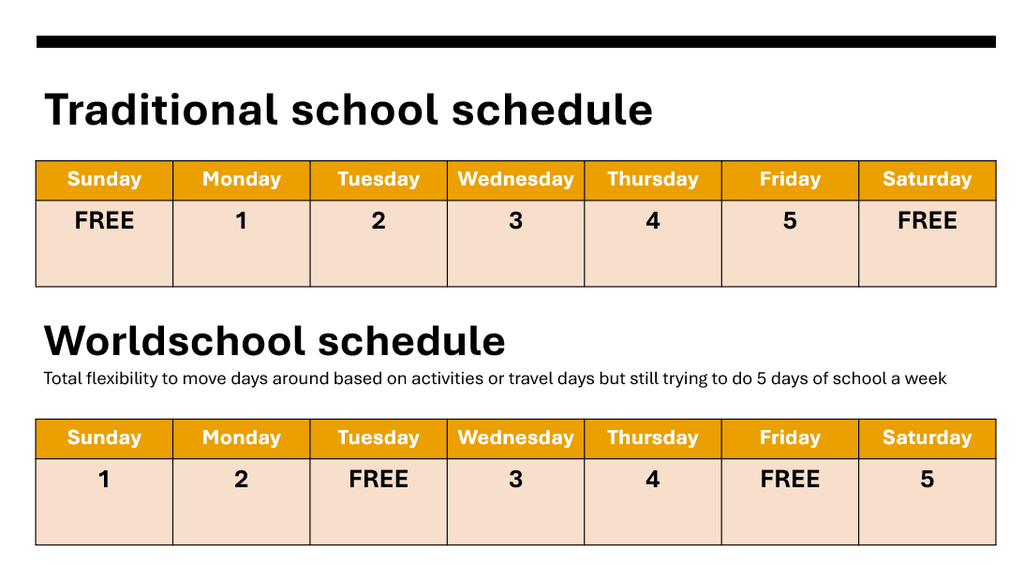
The idea was simple enough. We’d still do school five days a week, and each school day would include 20 minutes each of math, English, and French. After that, we’d alternate between a unit study that we chose and an elective chosen by the girls.
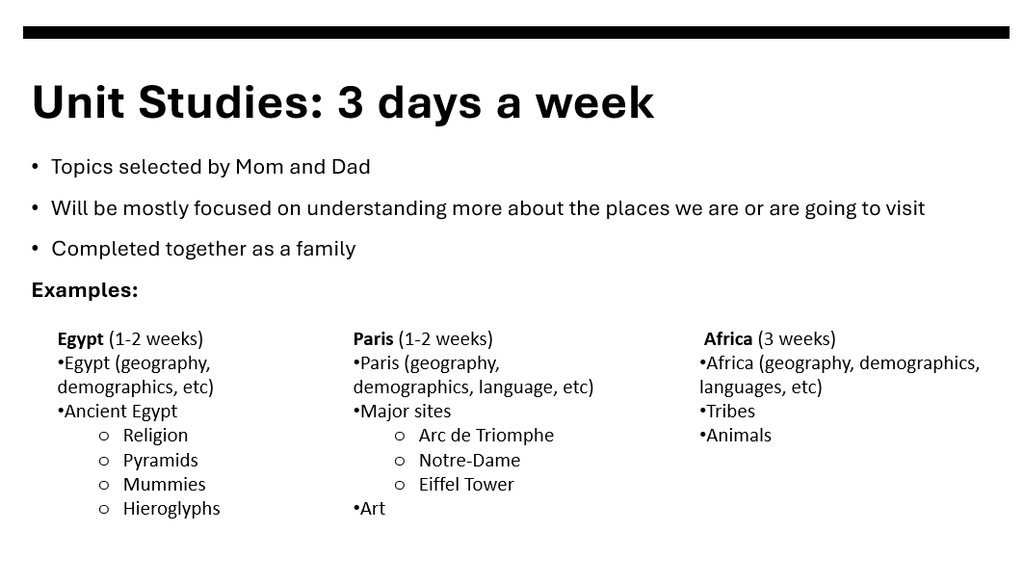
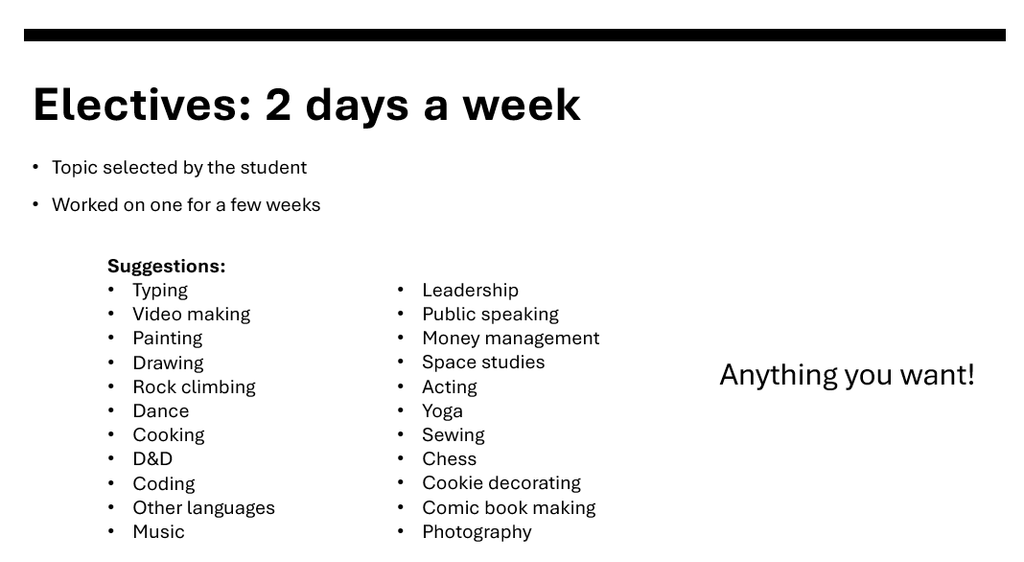
What a glorious plan it was. And, like most highly detailed and ambitious plans, it wasn’t particularly reflective of reality.
First of all, our “school days” have become much more dependent on our travel plans and whatever happens to be going on that day. We’ve taken extended breaks while at Disneyland Paris, during our time in Egypt, on safari days in Kenya, and pretty much the entire time we were in Dubai. On the flip side, we’ve settled into a really nice routine here in Thailand and are doing some form of schoolwork almost every day.
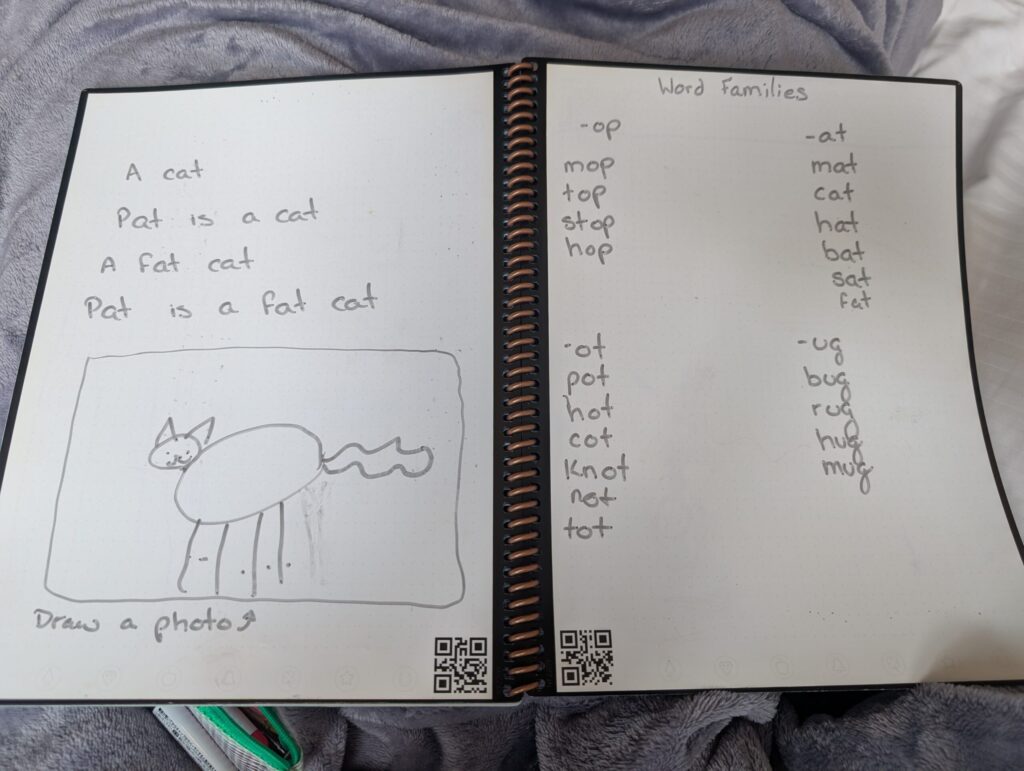
Secondly, the actual execution of our school days looks quite different from what we originally imagined. Our main focus has been English and math, usually spending at least 20 minutes on each through one-on-one instruction. For Izzy, English has been almost entirely focused on developing her reading skills and phonics foundation. We’ve primarily used Bob Books, along with a phonics app that she gets to use as a reward between reading sessions.
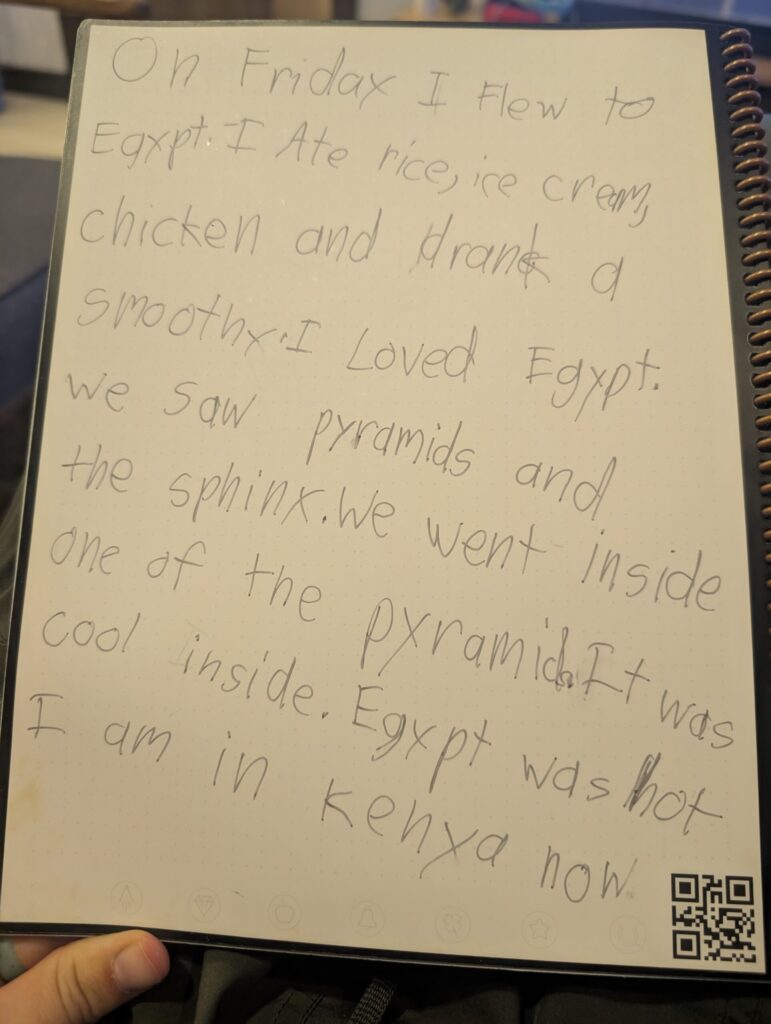
Emmy, on the other hand, spends about an hour reading on her e-reader every night after Izzy has fallen asleep. Because of that, her English lessons have focused more on developing her writing skills. She’s often reluctant to start, but she’s made noticeable progress and has even started spending some of her free time writing stories.
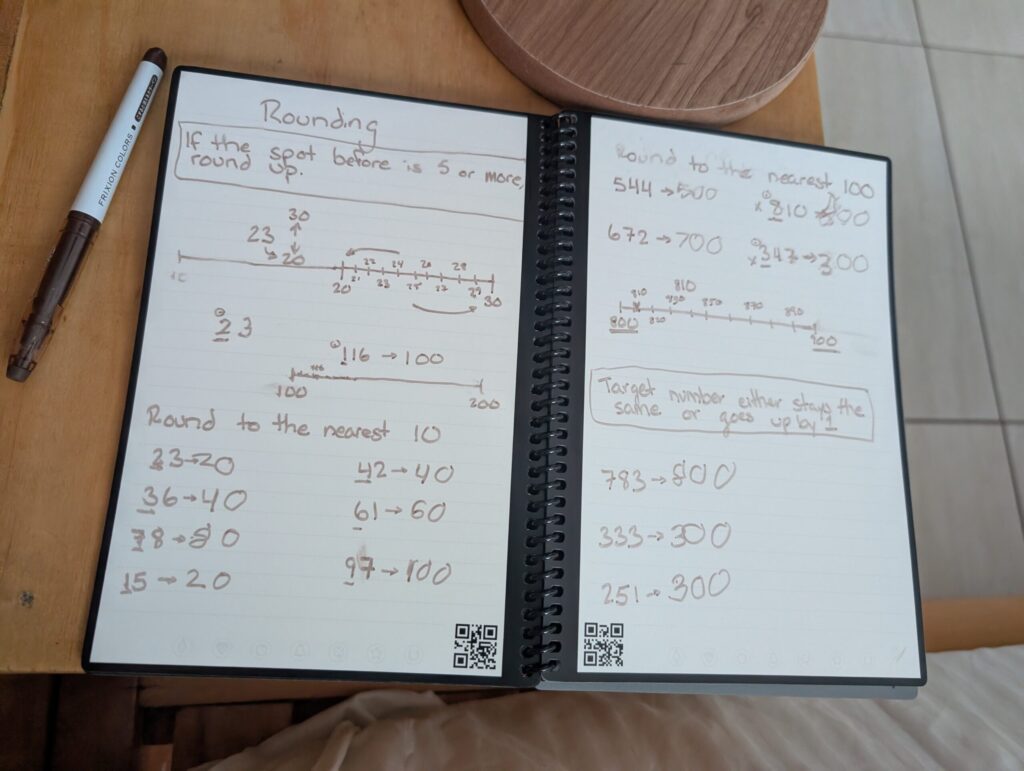
Both girls seem to be doing well with their math. They pick up new concepts quickly, and after covering the basics for their grade levels, we’ve shifted toward exploring topics that interest them, reinforcing core concepts, and playing math games (they currently love doing the New York Times pips puzzle every day).
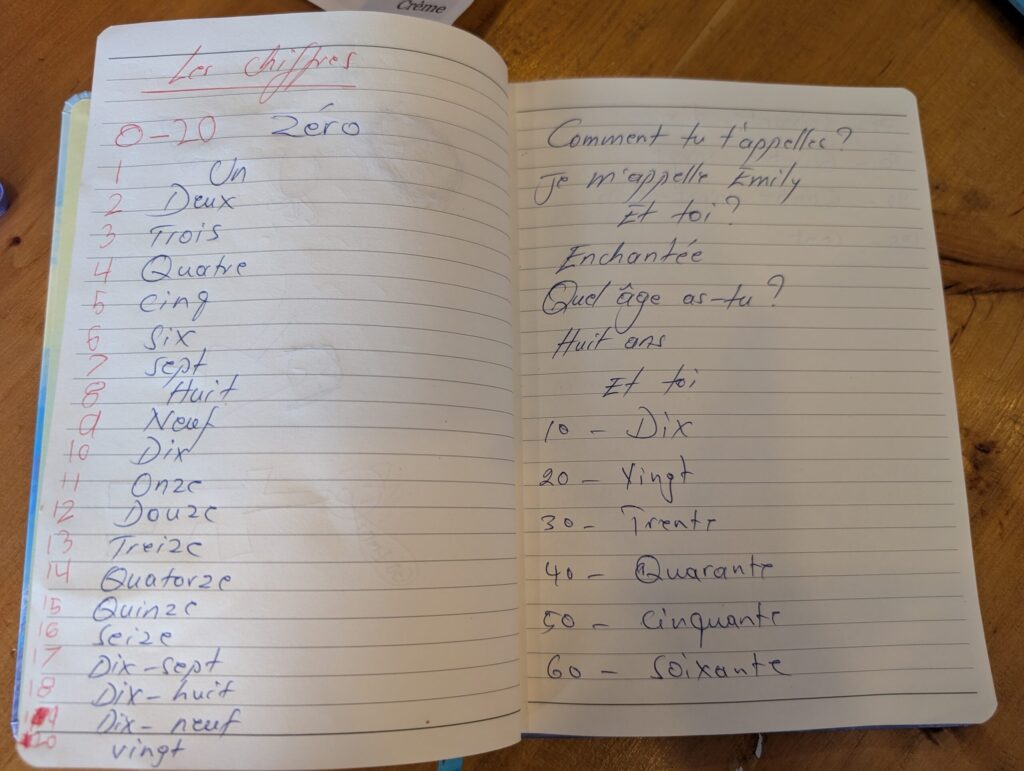
French is the area where we’ve scaled back the most. The girls do a little Duolingo when we have downtime, but we haven’t maintained the consistent approach I originally envisioned. We absolutely loved having an in-person French tutor in Nairobi, and after struggling to find something similar in Thailand, we’re now looking at hiring an online French teacher for our month in Chiang Mai.
As for our lofty plans around structured unit studies and electives, those haven’t really happened, at least not in the way I’d imagined.
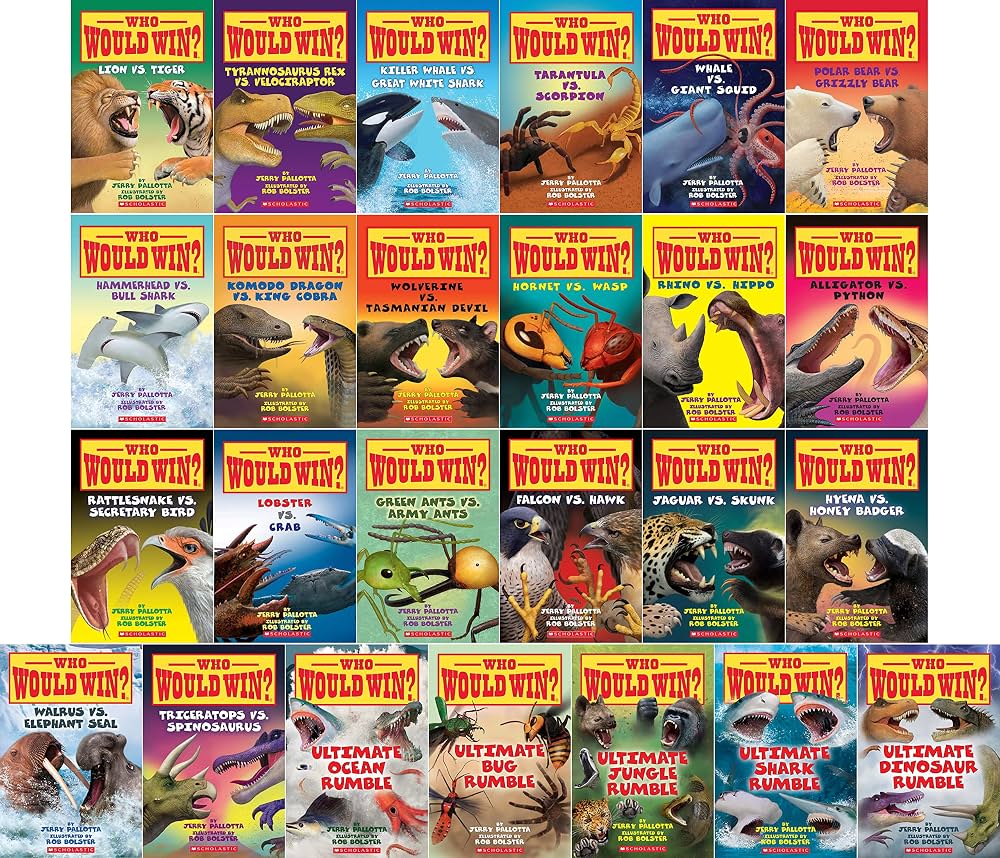
Since our safaris, we’ve become completely fascinated with animals. Emmy has now read every book in the Who Would Win? series that we could get our hands on, along with the What If You Had Animal Eyes? series and several others in the same vein. On that note: using the library Libby app on her e-reader has been a life saver and has worked so well so far.
I mentioned in a previous post that we’ve removed the girls’ tablets outside of travel days. As a result, their only screen time now comes from content that we intentionally choose together. We’ve mainly been watching Wild Kratts episodes while learning about the animals found in each region we visit. While on safari, trying to locate a panther, Emmy proceeded to tell us all about their hunting strategies, so some of it is sticking at least. We also watched YouTube videos geared towards kids that explore the history, culture, religions, and geography of countries before we arrive to try and help the prep the girls for what to expect.
In a way, the “unit studies” still happened. They just emerged naturally from our travels and selected downtime rather than from a carefully crafted curriculum.
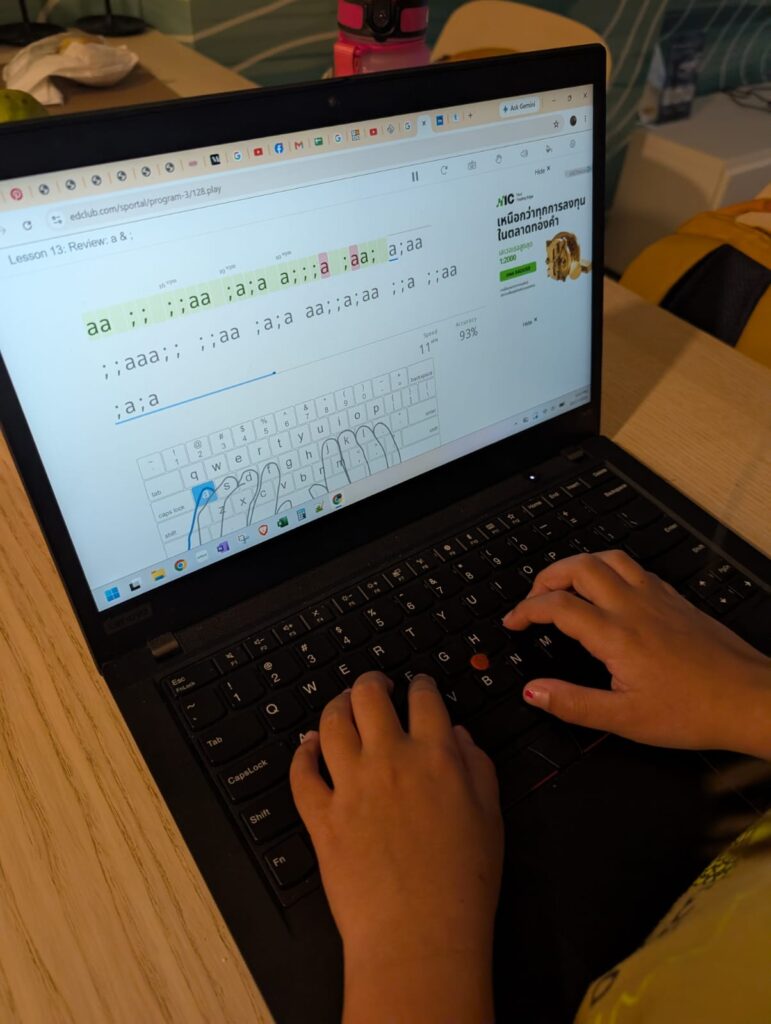
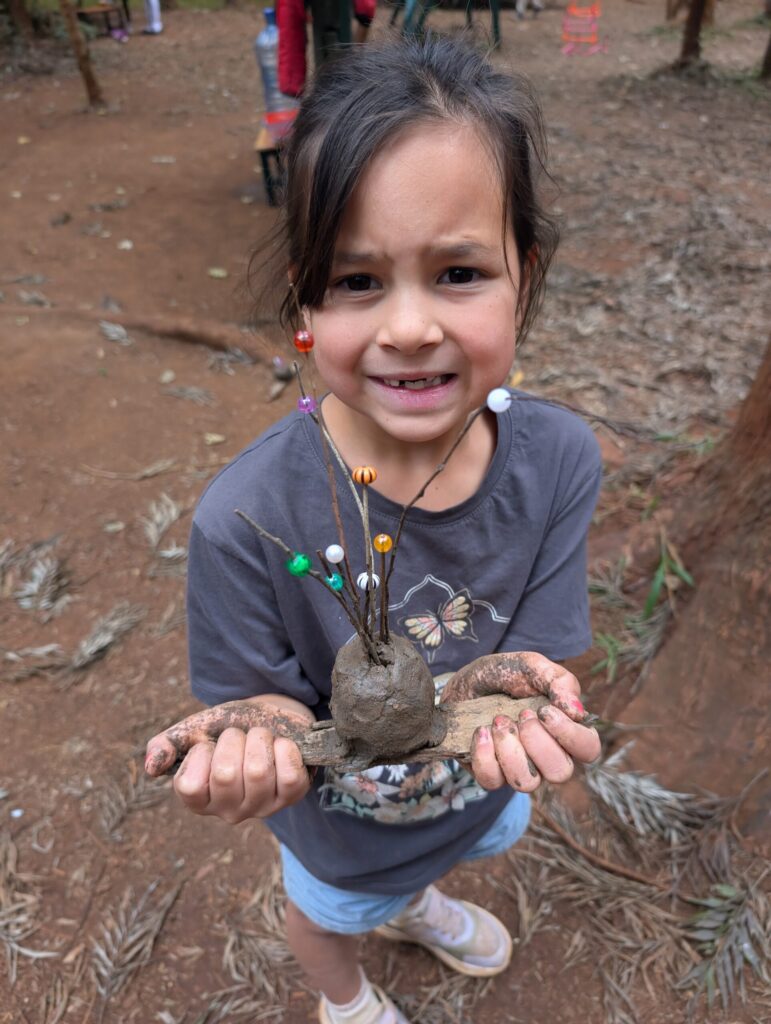
As for electives, Emmy expressed interest in learning how to type and become more comfortable using computers, so we found a free online typing program for her. Beyond that, I’m always looking for opportunities to sign the girls up for local classes. So far we’ve done forest school, art classes, high ropes courses, climbing gyms, horseback riding and this week they have a nail art class.
So, two months in, worldschooling hasn’t unfolded exactly the way I pictured it. But what has happened has been a really enjoyable mix of interest-driven learning, real-world experiences, and exploration.
Something I’m certainly trying to keep in mind is that learning doesn’t always need to look like school. Sometimes it looks like reading about predators after spotting a lion on safari. Sometimes it’s a conversation about Buddhism before visiting a temple or watching videos on the UN before visiting their campus.
And sometimes it’s taking a break altogether. That’s probably been the most refreshing part. We’ve been able to pause when it makes sense, enjoy where we are, and not feel guilty about it. I’m sure we’ll continue changing, adapting, and discovering what works best for our family as we go. I’m curious to see what worldschooling looks like a few months from now.