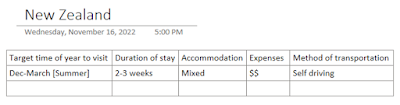
Once we had a list of must stop spots, we did a high-level review for each destination to capture key details like timing, duration, costs, and transportation. Here’s an example for New Zealand:
As we worked through this exercise, we realized our destinations fell into two categories:
- Places where we want to slow down and immerse ourselves
- Places where we want to move quickly and cover more ground
Slow travel is all about staying longer in one spot, using one accommodation, and living like a local. It’s a big shift from the whirlwind trips of our 20s—like backpacking across Europe and hitting seven countries in ten days! When you’re traveling for months, especially with kids, slowing down becomes essential.
It gives you time to unpack your suitcase, shop at local markets, explore playgrounds, and make connections. You’re not rushing from one tourist attraction to the next—you’re savoring the experience, discovering hidden gems, and enjoying the rhythm of everyday life in a new place.
For us, incorporating slow travel periods is key to keeping everyone sane. With destinations picked and a rough idea of where we’d like to slow down for a few weeks, we started optimizing the plan. That meant arranging stops so they make sense geographically, seasonally, and logistically—considering flight times, costs, and climate.
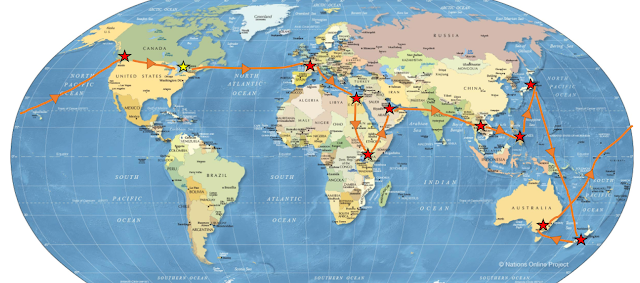
We also wanted to avoid extreme weather. I’ve experienced southern China during peak summer—it was ridiculously hot and really limits the amount of time you can spend outside. So, with all that mind, we started mapping out options: hitting areas in their peak weather windows, considering westward travelling or eastward travelling to minimize flight durations. After more iterations than I can to admit, here’s where we ended up:
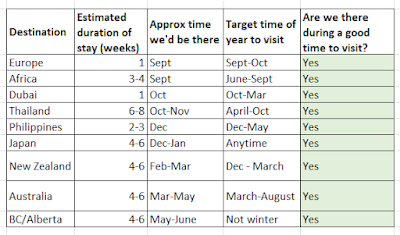
This plan has us travelling eastward (with the exception of New Zealand to Australia), hitting our highlights, experiencing some amazing holidays/festivals, and avoiding extreme weather windows.